
Digital Spirometer
SPIROCOM — digital spirometer
Full pulmonary function assessment: VC, FVC, MVV; live predicted-value graphs; ATS (American Thoracic Society) criteria and BTPS (body temperature, pressure, saturated) correction.
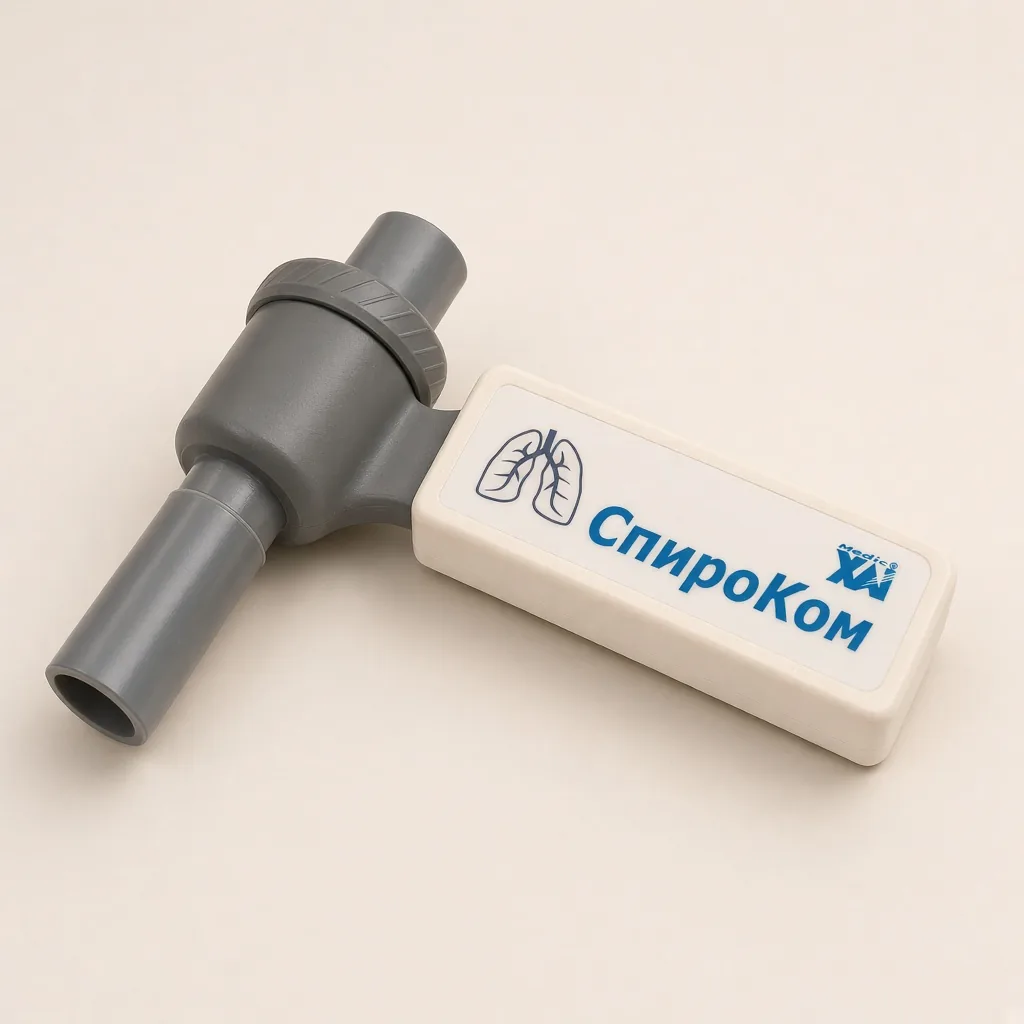
Digital Spirometer
- Tidal breathing, VC, FVC, MVV
- Reference equations and live predicted-value graphs during recording
- Maneuver processing per ATS
- Auto-stop, markers, BTPS, reports
- Replaceable reusable plastic tubes and mouthpieces
- Pro: test sets and comparative report
Key specifications
- Method
- differential pressure sensor
- Flow
- 0.2–16 L/s
- Volume
- 0.2–6.5 L
- Resolution
- 24 bit
- Sensor
- temperature-stabilized
- Kit
- 20 tubes + 20 mouthpieces
- Interface
- USB
Public procurement codes (Prozorro)
Ready-to-use wording for Ukrainian tender documents, specifications and contracts. We can send technical requirements on request.
Комплекс спірографічний комп'ютерний
- ДК 021:2015
33120000-7Системи реєстрації медичної інформації та дослідне обладнання- НК 024:2023
13680Діагностувальний спірометр- НК 031:2024
Z12150101Клінічні/діагностичні спірометри
Five key advantages
-
Differential pressure sensor Unlike modern turbine and pneumotachometric spirometers — higher accuracy and simpler hygiene: the sensing assembly stays in place; only the tube and mouthpiece are swapped.
-
High hygiene standard Reusable replaceable tubes and mouthpieces with chemical disinfection — patient-contact parts are replaced between patients and processed per the instructions.
-
Automatic BTPS conversion Volumes are converted to lung conditions (≈37 °C, water-vapour saturated) for correct comparison with predicted values.
-
ATS test standards FVC quality and reproducibility criteria per ATS — curve-shape control during acquisition.
-
Auto-calculation with manual correction Automatic calculation of maneuvers and markers; the physician can correct them manually in complex cases.
Software capabilities
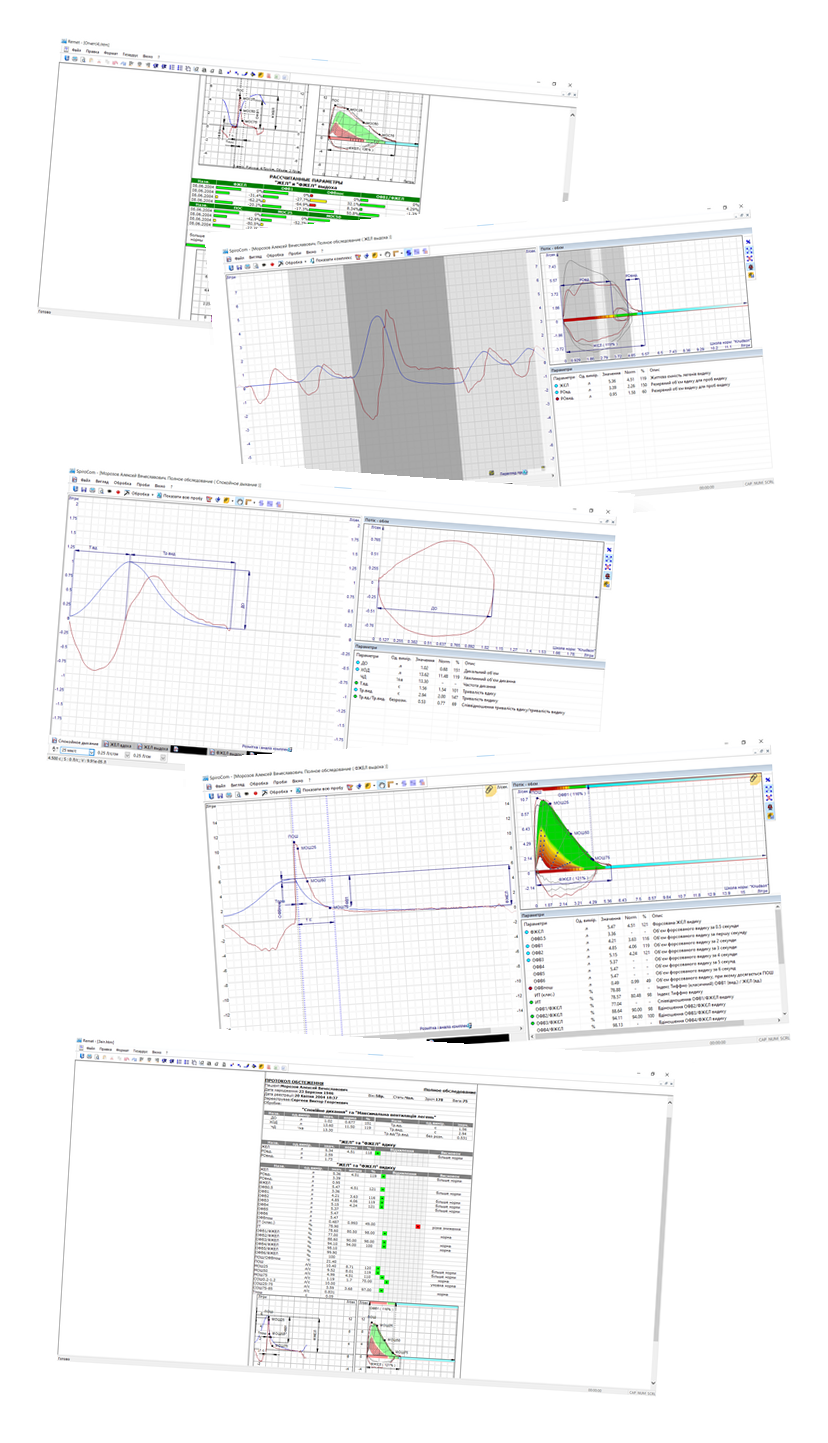
Software SPIROCOM
- Patient database: multiple databases; network access; search and sorting; shared database with REO / EEG; import / export
- Study-type and test-protocol editor: number and order of tests, reference equations, report template, recording settings, auto-stop and auto-advance between tests
- Report and print template editor with print preview
- Maneuvers: tidal breathing; vital capacity VC (inspiration and expiration); forced vital capacity FVC (inspiration and expiration); maximal voluntary ventilation (MVV)
- Protocol recording: baseline (zero line); start / stop; auto-stop by time or quality criteria; repeat maneuvers and best-effort selection
- Flow–volume and volume–time plots; live predicted-value curves during the maneuver
- ECCS, Clement, Knudson and Pistelli & Bottai reference equations
- ATS spirogram analysis: FVC reproducibility, best-effort selection, flow–volume curve quality control
- Automatic landmark placement; manual correction; 30+ spirometric parameters with predicted-value comparison
- BTPS volume correction; calibration coefficients; device calibration check
- Results review, automatic summary text, report generation; print graphs and tables; patient photo in the study record
- Export of data and graphs (Word, Excel, XML, HTML); e-mail
- Integration with hospital information systems (HIS / MIS)
- Built-in CLORM for telemedicine consultations, storage and data exchange
- Software interface, reports and printouts in Ukrainian, English and Russian
Pro software
- Functional tests (bronchodilator, provocation and others) — Tests menu
- Test-set recording (pharmacological, exercise, treatment follow-up)
- Comparative report — tables and graphs of parameter changes within one visit and across visits
- Link test sets to the patient visit
Documents and guides
Quick guides
Spirometry: preparation and quality
SPIROCOM · quick guide · ATS/ERS criteria
1What counts as an acceptable manoeuvre
Check the flow–volume curve before looking at the numbers: if the start is slow, there is a cough or the exhalation is cut off, repeat the manoeuvre.
2Example: the FVC manoeuvre, 4 steps
- 1Posturefor all manoeuvres: sit upright, spirometer vertical, lips sealed, nose clip on
- 2Inhale2–3 quiet breaths, then a maximal full inhalation
- 3Blastexhale hard and fast with maximal effort
- 4Keep goingkeep exhaling to a plateau (≥ 6 s), then inhale quickly
3Before the test
Patient preparation
- No smoking for at least 1 h before the test
- No vigorous exercise for 30 min, no tight clothing
- Enter exact age, height and sex
Typical errors
- Slow or hesitant start
- Cough in the first second
- Air leak around the lips; tongue in the mouthpiece
- Exhalation stopped early
4Processing tubes and mouthpieces after each patient
- 1Disassemble and rinsedetach tube and mouthpiece, rinse under running water (only these parts)
- 2Disinfectwash, then soak in a plastic-safe disinfectant; contact time per label
- 3Dry and lubricatedry at ≤ 60 °C; rubber seals — silicone oil from the kit
Kit includes 20 tubes + 20 mouthpieces. No autoclaving. Details — in the SPIROCOM brochure.
✔ Pre-test checklist
Hygiene and disinfection: tubes, mouthpieces, housing
Tubes · mouthpieces · housing · quick guide based on the SPIROCOM brochure
1Processing tubes and mouthpieces
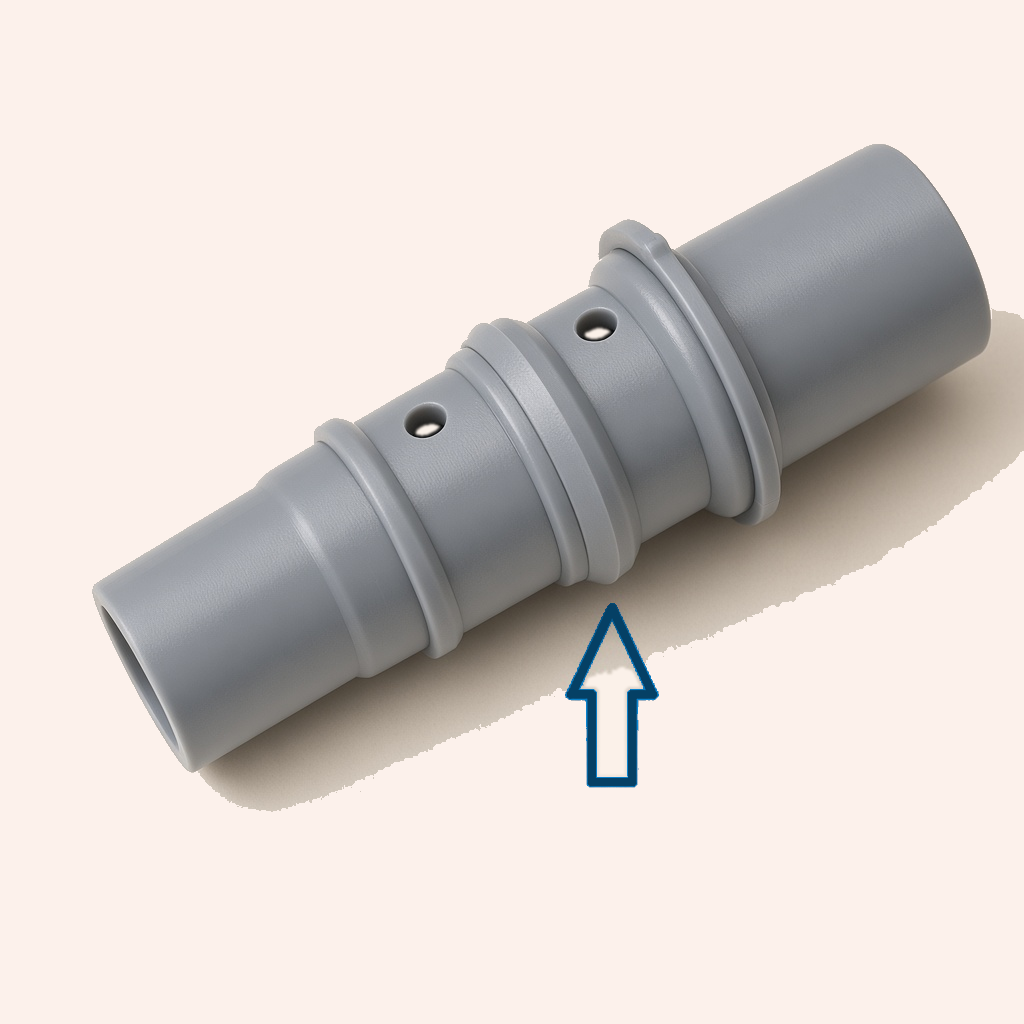
Replaceable reusable plastic tubes and mouthpieces — patient-contact parts are replaced between patients and processed per the instructions. Kit includes 20 tubes + 20 mouthpieces; extras available separately. Processing without autoclaving.
- 1Disassembly & rinsedetach mouthpiece and tube (quick-release); rinse under running water — tubes and mouthpieces only
- 2Pre-clean & soaksoap/soda or enzyme solution, soft brushes; then plastic-safe disinfectant (QAC, tertiary amines, glutaraldehyde, oxygen-based — e.g. Aniozym, Dezefect, Septodor); contact time per label
- 3Dry & lubricaterinse thoroughly → dry at ≤60 °C; rubber seals — silicone oil from the kit (before next use)
2Step by step
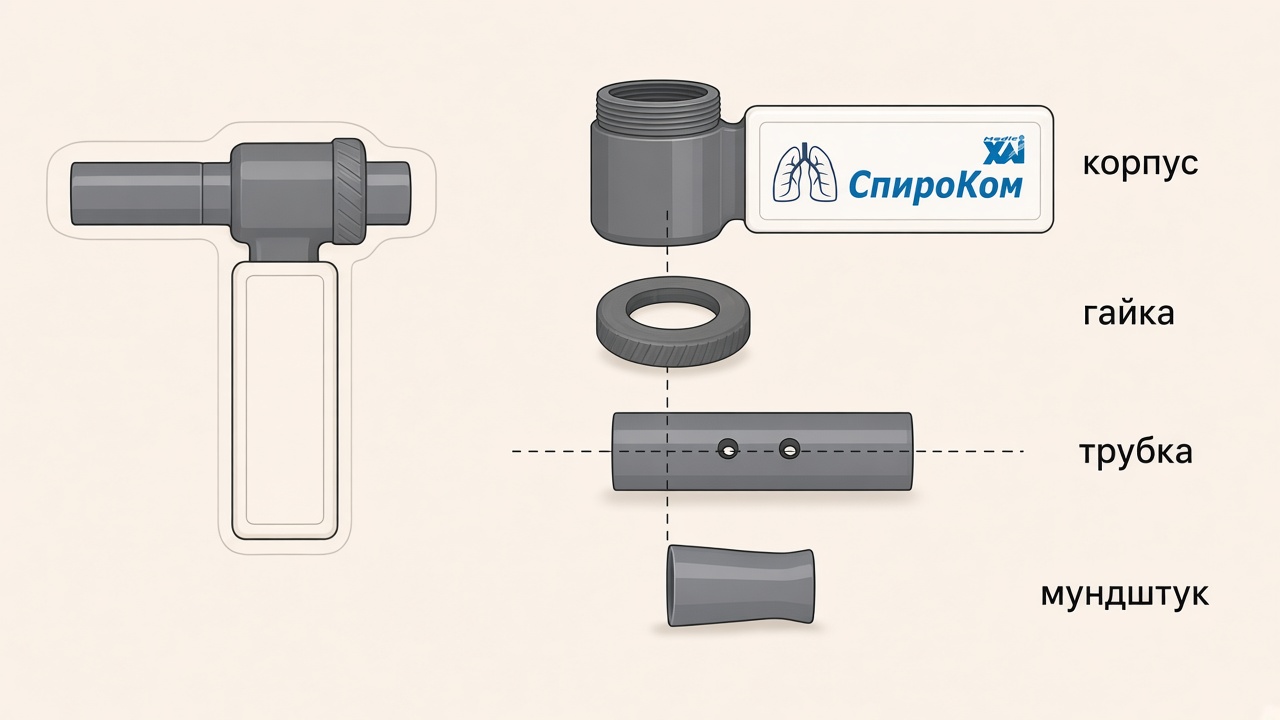
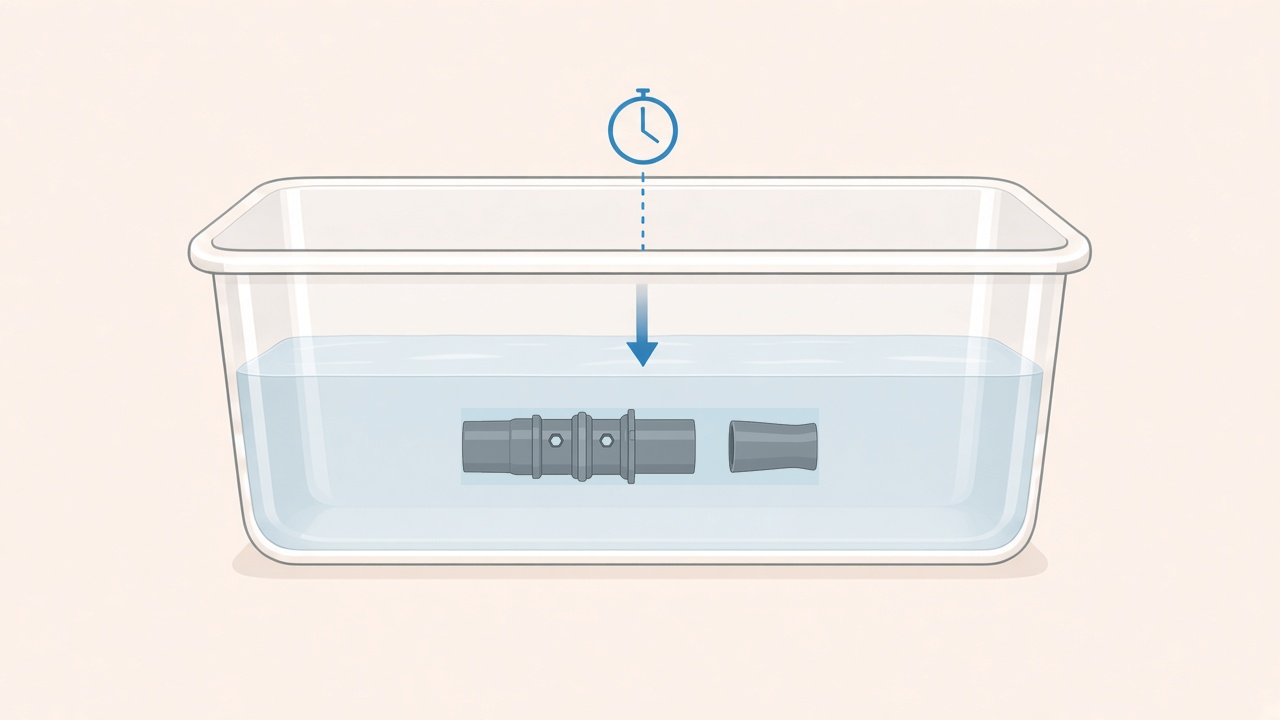
✔ Do
- Replace the tube and mouthpiece after every patient
- Process only tubes and mouthpieces: rinse, soak in a plastic-safe disinfectant
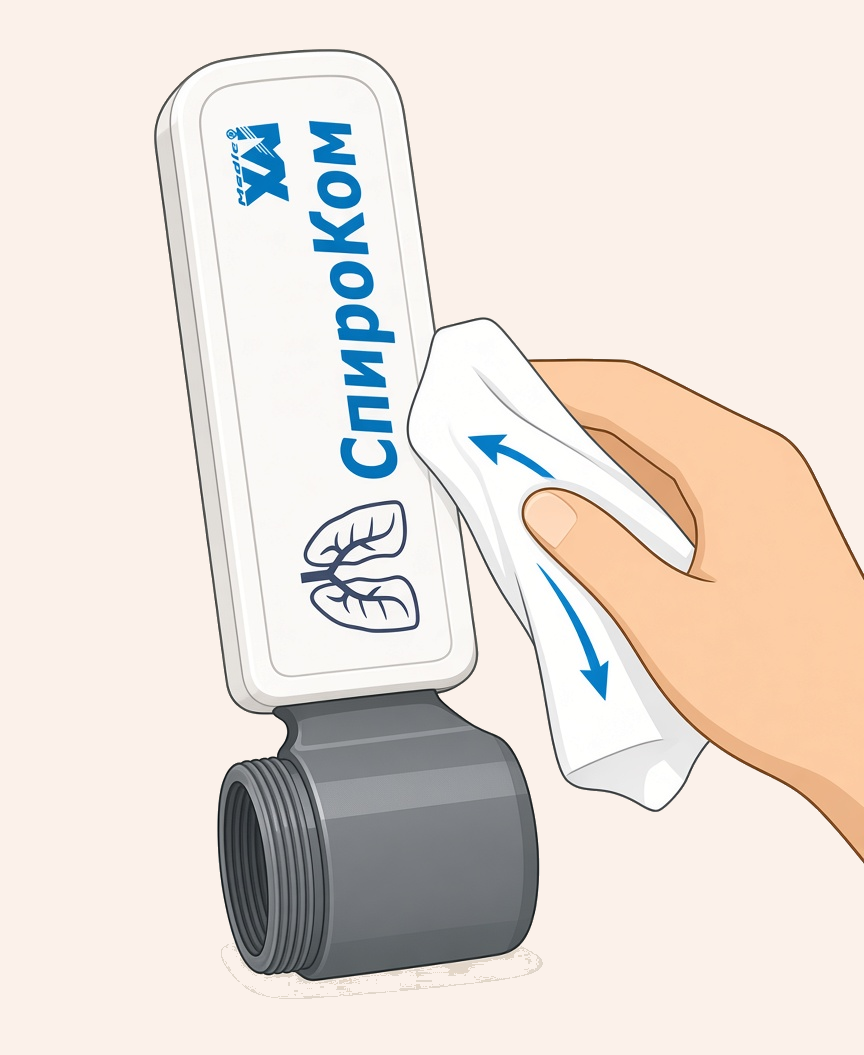
- Wipe the housing with a 70 % alcohol wipe
- Lubricate rubber seals with the silicone oil from the kit
✖ Do not
- Autoclave tubes and mouthpieces
- Let liquid get into the tube holder
- Give the next patient the same tube and mouthpiece without processing
✔ Checklist after every patient
General earthing requirements for functional diagnostics systems
Earthing of functional diagnostics devices
Standards: IEC 60601-1, IEC 62353, local wiring rules
1Mains: TN-S or IT only
The protective conductor is the third (earth) pin of the socket. Never fit a PE→N jumper in the room. IT — via a medical isolating transformer.
2“Star” layout, not “daisy chain”
Each device goes to the bar with its own conductor. Loops pick up mains noise into the microvolt-level signal.
3Equipotential bonding in the room
4Earthing loop requirements
- A separate working (functional) earth, FE, independent of the hospital protective earth (protective earth norm: up to 4 Ω).
- Distance to other earthing systems — at least 15 m.
- Connect only through the third (earth) conductor of the socket.
5Testing and operation
- Measure contact resistances and insulation before first use.
- Then periodically per clinic policy (usually once a year).
- Record the results in a log.